

The Graph-Paper Notebook by the Kettle, and the Eight Herbs on a Torn Page
A retired accountant who balanced other people's books for 34 years starts keeping her own numbers in pencil, beside a friend's torn page of loose-leaf herbs. The label, the honest research and the return terms, read line by line.

First, the people: Lorraine Abbott is a pen name. Hattie, Leon and the Thursday bridge table are composites, the way kitchen columns have always been written.
Everything about the tea itself, its label, its price, its brewing directions, its reviews and its return terms comes from the seller's own pages, read in October 2026.

On the second Tuesday of February, I sat in the clinic parking lot for eleven minutes with the engine off and a folded sheet of lab results on my knee.
I didn't cry and I didn't call anybody. I did what I have done with every unpleasant piece of paper since 1981: I read it again, slowly, with my finger on the line.
My clinician had been kind about it. She is a careful woman who types while she listens, and she turned the screen toward me the way you'd turn a ledger toward a client.
"Your numbers are drifting, Lorraine," she said. "Not a verdict.
A direction. Walk after supper, watch the afternoons, and I'll see you in three months."
I'm sixty-four. I kept books at a farm cooperative outside Harrisburg for thirty-four years, the grain accounts, the feed accounts and the fuel accounts nobody else wanted.
And sitting in that parking lot, I understood something that should have been obvious. I had spent my whole working life watching other people's numbers drift, and I had never once kept a ledger on my own.
So this is a column about a notebook. It's the graph-paper kind with the faint blue squares, the kind I bought by the case for thirty years and never once used for myself.
It's also about a torn page in my friend Hattie's handwriting, a bag of loose-leaf herbs from a tea house in Oregon, and what the notebook said after twelve weeks of pencil.
If you've ever come home from an appointment with a direction instead of a verdict, you'll know most of this already. You just haven't seen anybody write it down in columns.
Thirty-Four Years of Other People's Numbers
Bookkeeping at a farm co-op is not glamorous work. It is receipts in a shoebox, fuel tickets with diesel thumbprints on them, and a fiscal year that ends whether the harvest cooperates or not.
I loved it anyway. I loved the moment at the end of a month when two columns that had been arguing all week finally agreed with each other.

The job teaches you one lesson above all the others. A number on its own tells you almost nothing; a number next to last month's number tells you everything.
A fuel bill of four thousand dollars means nothing. A fuel bill of four thousand dollars that was twenty-eight hundred last March is a phone call you make before lunch.
I made a lot of those phone calls. I was the woman in the back office who noticed when a farmer's account had been creeping for six months, and who said so gently, before the bank did.
Here is the embarrassing part. My own body had been creeping for longer than six months, and I'd been filing the evidence under "weather."
The afternoons were the first entry I ignored. Around three o'clock, every day, a heaviness came over me that I blamed on the house being warm.
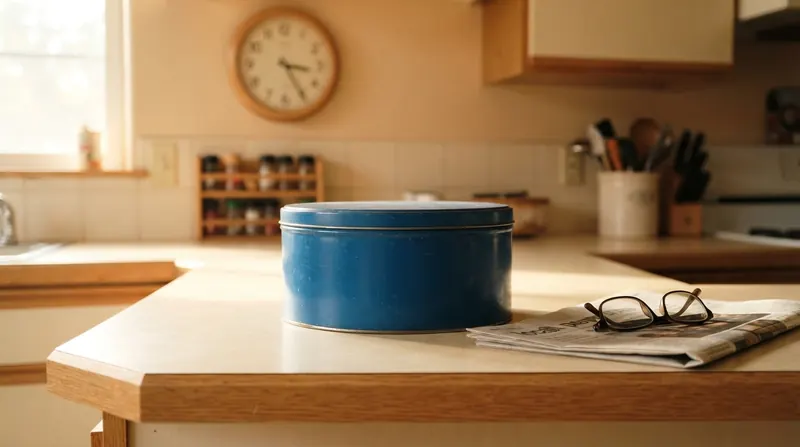
The second entry was the cookie tin. It's a blue Danish butter cookie tin that has lived on the counter since my daughter was in grade school, and it has never once held Danish butter cookies.
The third entry was the recliner. I'd sit down with a library book after lunch and wake up with the book on my chest and the mail carrier long gone.
I'd have caught all three in a farmer's account in one afternoon. In my own kitchen, I needed a clinician with a turned screen to read them back to me.
What a Bookkeeper Does With a Folded Lab Sheet
I drove home from the clinic and went straight to the hall closet, where a case of graph-paper notebooks has been sitting since the co-op switched to software in 2016.
I took one out, sharpened a yellow pencil with the little crank sharpener that's been screwed to the pantry door since 1994, and sat down at the kitchen table.
Then I ruled the first page the only way I know how. Date down the left, and across the top, the things my clinician had asked me to watch.
Column one: the morning reading. She had suggested a few mornings with a meter from the pharmacy, so I wrote it the way I'd write a fuel ticket, number and time, no commentary.
Column two: what I ate after noon. Not a diet, just the facts, the way you'd list deliveries.
Column three: minutes walked after supper. Column four: how many times the lid came off the blue tin.
And column five, which made my husband Leon laugh out loud, was pages of the library book read before my eyes closed in the recliner.
Leon is a retired mail carrier. He walked eleven miles a day for thirty years and he believes, with his whole heart, that every problem in the world can be solved by going outside.
"You're auditing yourself," he said, reading over my shoulder. I told him somebody should have started years ago, and he went to get his walking shoes, which is how Leon apologizes.

The first week of columns was humbling. The blue tin opened four times a day on average, and the library book averaged six pages after lunch before I was asleep.
The morning readings I won't print here, because they're between me and my clinician. But I'll tell you their shape: they were higher on the mornings after the days the tin opened most.
That's not a scientific finding. It's a bookkeeper noticing that two columns were moving together, the way fuel and freight always did.
What I Spent Before Anybody Tore a Page Out
I want to be honest about the month before Hattie's torn page, because I think that's the part most columns skip. A story that only lists what worked is an advertisement wearing a cardigan.
So here's the inventory, with prices, the way I'd write up an expense report that went sideways.
Item one: a jar of ground cinnamon from the spice aisle, $4.29. I'd read somewhere that cinnamon was the answer, so I put it on my oatmeal every morning for three weeks.
My oatmeal tasted like a candle store. The columns didn't notice.
Item two: a bottle of apple cider vinegar, $6.99. A woman at church swore by a shot of it before supper.
I lasted nine days. My throat felt like I'd been gargling a car battery, and Leon started leaving the room when he heard the cap.
Item three: a phone app at $9.99 a month, which promised to "coach" me through my afternoons with little cartoon badges.
I cancelled it in the second month. A bookkeeper does not need a cartoon to tell her a column went up.
Item four: sugar-free cookies, $5.49 a box, four boxes. They went into the blue tin, which turned out to be the problem, because I ate twice as many on the theory that they didn't count.
They counted. Column four counted every one of them.
Item five, the expensive one, cost no money at all: I started skipping bridge. The Thursday table at Hattie's house has a dessert plate in the middle, and I'd decided the plate was the enemy.
That was the worst entry in the whole ledger. When you skip the people to avoid the plate, your world gets smaller one Thursday at a time.
Add it up and I'd spent about $60 in a month on things that didn't move the columns, plus three Thursdays I'll never get back. I tell you the number because I suspect many of you have a number of your own and have never added it up.
Why the Afternoon Is the Account Nobody Audits
Here is something I didn't understand until I'd kept the notebook for a while. Most of my purchases weren't foolish, and if you've made similar ones, yours weren't either.
They were aimed at the wrong hour. The cinnamon was aimed at breakfast, the vinegar at supper, the app at my phone, and the sugar-free cookies at my conscience.
None of them were aimed at three o'clock, which is where the notebook said the trouble lived. That's the hour the house goes quiet, the hour the tin calls, the hour the recliner wins.
I've since started calling it the three o'clock account. You may have your own name for it.
It isn't loud. It doesn't send you anywhere with sirens.
It's a small daily withdrawal that nobody writes down, a cookie here, a nap there, a skipped walk because it's already getting dark. And small withdrawals, as every bookkeeper knows, are the ones that empty an account.
The reason nobody audits it is plain economics, not a conspiracy. My checkup runs about twelve minutes, and twelve minutes is barely enough for the lab sheet, the arm cuff and my knee.
My clinician is a good woman and a careful one. But nobody gets twelve minutes of a clinic's day to talk about a cookie tin, and nobody builds a national campaign around a cup of something warm at three in the afternoon.
So the three o'clock account lives in the gap. It's too small for the appointment and too stubborn for willpower.
That gap is exactly where Hattie walked in, on a Thursday in March, with a brown paper bag and a page torn out of her own kitchen notebook.
What a Friend Brings When You Stop Coming
Hattie Lindqvist is seventy-one and taught home economics at the junior high for thirty-two years. She has taught half of Cumberland County how to hem trousers and the other half how to make a white sauce without lumps.
She noticed my empty chair at bridge before I'd admitted to anybody why it was empty. On the fourth Thursday, she didn't call; she drove over.
She sat down at my kitchen table without being asked, the way teachers do, and looked at the notebook lying open by the sugar bowl.
"Columns," she said. "Of course it's columns.
You'd keep columns on a house fire."
I told her what I'd told everybody. It's nothing, Hattie, it's just my age and the afternoons.
She looked at me the way she must have looked at a seventh-grader who swore the dog ate the apron. Then she said it slowly, as if she were reading a recipe card: "Your age explains the afternoons; it doesn't explain why you stopped coming to bridge."
That sentence sat at my kitchen table for a long time after her car pulled away.
Before she left, she took a brown paper bag out of her purse and set it next to the notebook. Then she tore a page out of her own little kitchen notebook, the spiral kind she keeps by her stove, folded it once and tucked it under the bag.
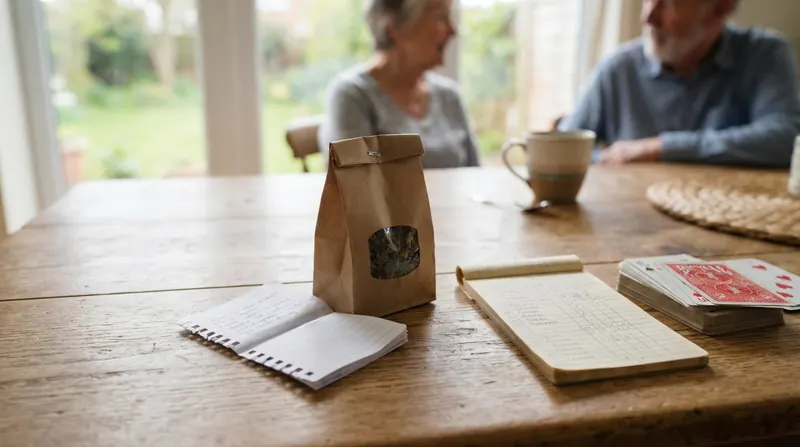
The bag was a 2-ounce pouch of loose-leaf tea from a company called Full Leaf, out of White City, Oregon. The page, in Hattie's tidy teacher's printing, was a list.
I read that page four times before supper. Then I did the Lorraine thing: I put the bag in the cupboard and decided to audit it before I'd let it anywhere near the kettle.
Did you read my page, or is it already filed?
7:42Four times. It's in the cupboard until I've audited the bag.
7:44Of course it is. Your chair is still at table two on Thursday.
7:45I'll bring the scorepad and the good pencils.
7:46Why a Home-Ec Teacher Trusts a Spice Rack
The next Thursday I went back to bridge, partly because Hattie had earned it and partly because I wanted to cross-examine her.
Between the second and third rubber, while Bev was shuffling and Marian was arguing about a bid nobody remembered making, I asked her where the bag came from.
Hattie's story was simpler than I expected. Her own checkup the previous autumn had come with a direction too, the same word mine had, and her clinician had told her the same thing: walk, watch the afternoons, come back.
"I'm a home-ec teacher," she said. "When somebody tells me to watch the afternoons, I look at what's in the kitchen at three o'clock."
What was in her kitchen at three o'clock, for forty years, was a percolator and a coffee cake. She didn't want to give up the ritual; she wanted to change what was in the cup.
So she went looking for a loose-leaf blend made of things she could picture. "I won't drink anything I can't find in a spice drawer or a garden bed," she said, and played a three of clubs with tremendous dignity.
She'd found the Full Leaf bag through a cousin in Oregon, read the ingredient line on the back, and recognized every word on it. Eight plants, all organic, nothing she'd need a dictionary for.
"I'm not telling you it does anything to your numbers," she said. "I'm telling you it gave my three o'clock something to do with its hands."
Bev, who has never been quiet a day in her life, said that was the most sensible thing anybody had said at that table since 1997. Marian said it was a terrible bid.
I've thought about Hattie's sentence a great deal since then. She didn't promise me anything, and she didn't use a single big word; she gave me a list and an egg timer.
In my experience, people who are selling you something give you promises; people who care about you give you a list.
The Bag, Read the Way I'd Read an Invoice
So here is what I did with the bag, the way I'd have handled a new vendor's invoice at the co-op. I read every line on it, front and back, and then I went to the seller's own website and read every line there.
I'll go through it in order, because order matters on an invoice. Whatever a company prints first is usually what it wants you to notice; whatever it prints small is usually what you need to know.
The product type. The seller's own listing calls it "Loose Leaf Tea," and the pouch says the same thing, with the USDA Organic seal on the front.
That matters for the reason Hattie gave. Loose leaf means you can see what you're brewing: you open the bag and the herbs are right there, cut and dried, not ground into a powder you have to take on faith.
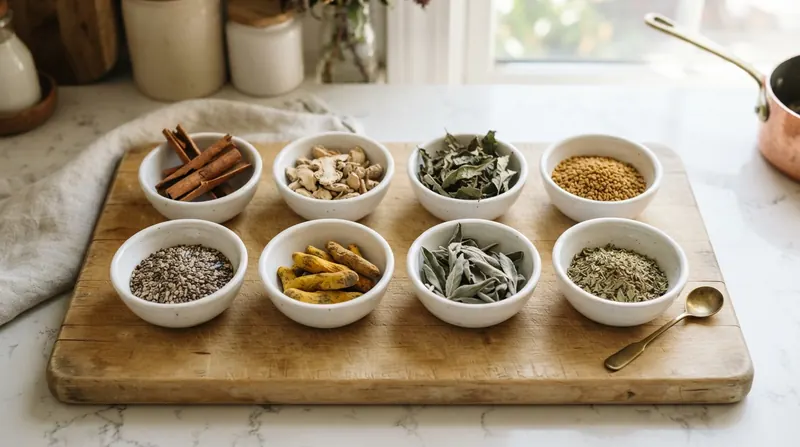
The ingredient line, in the order printed. Organic cinnamon, organic ginger root, organic holy basil, organic fenugreek, organic milk thistle, organic turmeric, organic sage and organic oregano.
Eight ingredients, and every one of them a plant. There is no sweetener, no flavoring listed separately, and no word on the line that I couldn't have found in Hattie's spice drawer or the herb bed by her back step.
The amounts. Here is the first small-print item, and I'll say it plainly: the bag does not print how much of each herb is in the blend.
That's ordinary for a tea, the way a seasoning blend doesn't tell you how many grams of paprika it holds. But it means nobody, including me, can honestly compare this cup to any study that used a measured amount of anything.
The caffeine line. The listing says "Caffeine Content: None," and the pouch says caffeine free.
None of the eight plants is a tea plant in the caffeinated sense.
For an afternoon cup, that was the line Leon cared about most. He has strong opinions about anybody in this house drinking anything stronger than water after two o'clock.
The serving. The pouch says 2 ounces, and the listing says approximately thirty servings per bag.
The directions are short: one to two teaspoons in eight ounces of boiling water, steeped five to seven minutes.
The statement at the bottom. The seller's page carries the standard sentence that these statements have not been evaluated by the Food and Drug Administration, and that the product is not meant to stand in for medical care.
I want to stop on that sentence, because most people's eyes slide right past it. That sentence is the most honest line on any supplement label, and it outranks every other line, including the name.
And the name is the part I'd circle in red if this were an invoice. The product is called "Blood Sugar Balance," which is a name, not a finding, the same way a paint color called "Summer Meadow" won't put a meadow in anybody's hallway.
The seller's description uses some confident language of its own, and I won't repeat it here. I'll tell you what the research says instead, which is what the next section is for.
What the Studies Say, Herb by Herb, Including the Shrugs
I spent three evenings at the library, and Leon drove me twice because he wanted to see what an audit looked like from the passenger seat. Here's what the file says, and I'm going to print the shrugs in the same size type as everything else.
Cinnamon comes first on the label, so it comes first here. It's also the one everybody's heard about, which is how I ended up with a $4.29 jar on my oatmeal.
The National Center for Complementary and Integrative Health, part of the NIH, keeps a plain-English page on cinnamon. Its reading is honest: studies in people have produced mixed results, some reviews report modest changes in fasting numbers and others find no meaningful effect. [1]
Research in people shows mixed results: some systematic reviews report modest improvements in fasting blood glucose, while others find no significant effect.
There is not enough evidence to conclude that cinnamon is beneficial for any health condition.
— NIH National Center for Complementary and Integrative Health, Plain-language summary of the research on cinnamon[1]
I respect that page enormously. A government office that prints "mixed" and "not enough evidence" about the most famous spice in the cupboard is an office I'll believe on other things.
It also explained my oatmeal. A sprinkle of grocery-store cinnamon was never going to be the answer, and neither, honestly, is a spoonful of it in a tea bag; it's one plant in eight, in an amount the pouch doesn't print.
Turmeric is sixth on the label. The same NIH center says plainly that we don't know enough to conclude whether turmeric or curcumin helps with any health purpose. [2]
It adds two things worth knowing. Turmeric is likely safe for most adults for up to two or three months, and liver problems have been reported in some people who took highly concentrated curcumin products. [2]
A pinch of cut turmeric root in a tea is a long way from a concentrated extract. Still, I'm printing it, because if you already take turmeric in another form, the cup adds to it.
Now the plant that isn't in the bag. In this aisle, the herb with the biggest research file is one called gymnema, and I want to be careful, because it's easy to mix them up.
A 2021 review that pooled small clinical studies found gymnema supplementation was associated with lower fasting numbers. Reviewers of that research are careful to say the studies were small and differed a great deal from one another. [3]
In the Ayurvedic tradition, gymnema has an old Sanskrit name, gurmar, which roughly means "sugar destroyer," because chewing the leaf briefly dulls your sense of sweetness.
Here's the bookkeeping point: gymnema is not one of the eight herbs in this bag. I mention it only so nobody reading this column credits Hattie's tea with a study that belongs to a different plant.
I've seen that sleight of hand on other labels at the pharmacy. A product lists eight herbs and quotes the study of a ninth; it's like an invoice that bills you for the truck it borrowed from the next farm.
The other five herbs: ginger, holy basil, fenugreek, milk thistle, sage and oregano. That's six, I know, and Hattie corrected me at bridge, so I'll correct myself in print.
Ginger root, sage and oregano are things you already have in the kitchen. Fenugreek is the seed that gives curry powder its maple-like smell, and milk thistle is the spiky purple-headed plant that grows along fences in half the country.
Holy basil, called tulsi in India, is a cousin of the basil on your windowsill with a clove-like smell. It's a traditional herb in Indian kitchens and households.
I didn't find a study on any of those six that I'd be comfortable quoting for this tea, so I'm not quoting one. The label lists them as ingredients; it doesn't print a study about them, and this column won't invent one.
So here is the whole research file, written the way I'd summarize an audit for the board. One ingredient with mixed results, one with "we don't know enough," six kitchen-and-garden plants with long traditions and no claim attached, and no study at all on this particular bag.
That's not a marvel. It's not a nothing, either; it's an honest herbal tea made of things you can picture, in a bag that prints its ingredients plainly and doesn't pretend to be medicine.
And for my three o'clock account, an honest tea was exactly what the ledger called for.
Two Teaspoons, Boiling Water and Six Minutes by the Egg Timer
So I took the bag out of the cupboard. Here's the ritual, laid out the way I'd lay out a procedure for a new hire, because the ritual turned out to be the whole point.
Step one: the kettle. The directions say boiling water, so I fill the white enamel kettle and let it go all the way to the whistle, not the half-hearted rumble before it.
Step two: the spoon. One to two level teaspoons of the loose leaf, according to the label.
I started at one and moved to a heaping one in the second week, because the cup tasted stronger and I liked it better.
Step three: the infuser. Loose leaf needs something to sit in.
Hattie gave me a stainless mesh ball on a little chain, and later I bought a basket infuser that sits right in the mug, which is easier for hands that aren't as nimble as they were.
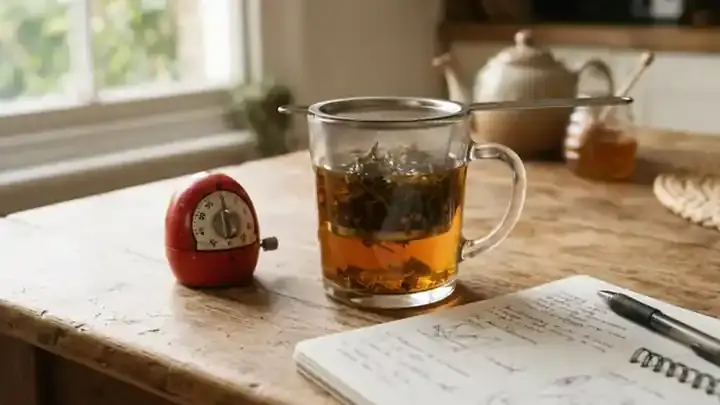
Step four: the egg timer. The label says five to seven minutes.
I set the old wind-up egg timer for six, because that's the middle of the range and because a bookkeeper always splits the difference.
Step five: the cup itself. I drink it at the kitchen table, at three o'clock, with the notebook open beside it and the blue tin on the far end of the counter where I'd have to stand up to reach it.
That's the whole procedure. No measuring cups, no blender, nothing to swallow with a glass of water; just a kettle, a spoon, an infuser and six minutes.
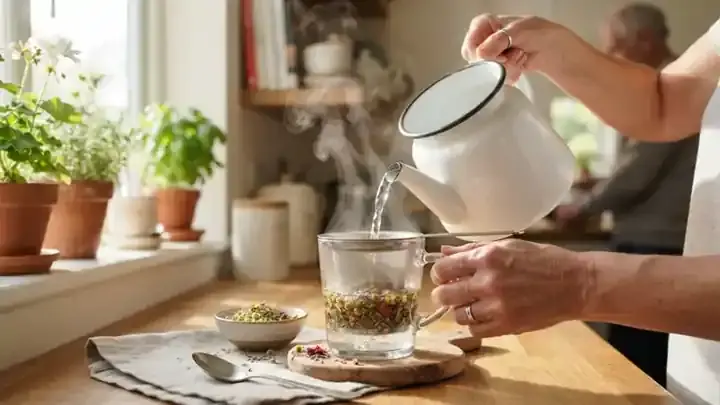
The taste, since everybody asks. The seller describes it as "a potent, savory blend with cozy and warming spiced notes," and for once a seller's description undersells it.
It's warm and a little peppery from the ginger, sweet-smelling from the cinnamon, and then the sage and oregano come in at the end. The first time, I said out loud to an empty kitchen that it tasted like Thanksgiving stuffing had gone to finishing school.
Leon tried it once and said it tasted like a casserole. He meant it as a criticism and I took it as a compliment, which is a fair summary of forty-one years of marriage.
It's not for everybody, and I'll show you the reviews that say so. If you want a sweet, flowery tea, this isn't it; it's savory, and it tastes like it came out of a kitchen rather than a candy store.
One practical complaint, printed in full. Loose leaf leaves a little sediment at the bottom of the cup, especially the fenugreek and the finer bits of turmeric.
There's no tea-bag version of this blend. The seller does sell empty paper drawstring tea bags separately, thirty for $4.95, and you fill them yourself, which Hattie does on Sunday nights in front of the television.
Five Things This Cup Is Not, Written Before Anything Else
Before I tell you what twelve weeks of the notebook said, I want to list what this cup is not. On an audit, the exclusions page comes before the findings, so nobody mistakes one for the other.
It is not medicine. It's eight dried plants in boiling water, sold as an herbal tea, with the standard FDA sentence printed on the seller's page.
If your clinician has given you anything for your numbers, the cup sits beside it, never in place of it. That sentence is in bold in my notebook, and it belongs in bold in yours.
It is not something you swallow with a glass of water. There is nothing to count out of a bottle, no powder to stir, nothing to chase with food; it's a mug and a kettle.
It is not a sweetener, and it is not dessert. There's nothing sweet added, and if you put three spoons of sugar in it you've simply moved the blue tin into the mug.
It is not caffeinated. None of the eight plants is a tea plant in the caffeinated sense, and the label says so, which is why it's an afternoon cup and not a morning one in this house.
And it is not for everyone. Holy basil, sage and oregano all belong to the mint family, so if that family disagrees with you, this bag will too.
If you're expecting, nursing, or you already take something daily for your numbers, take the bag to your pharmacist before the first cup. Cinnamon, fenugreek and turmeric are the three names I'd say out loud at that counter.
My pharmacist at the Giant on Market Street read the back of the pouch for me in about forty seconds. She said, "Kitchen herbs, no amounts printed, tell your clinician you're drinking it," and that is exactly what I did.
Morning, Lorraine. Your order is ready whenever you're by the store.
9:15Thank you. After my walk, around ten, if the line isn't out the door.
9:21Tuesdays are quiet. My mother wants the name of that tea that smells like a casserole.
9:22I'll write it on a recipe card and bring it with me.
9:24
Nine Customers, in Their Own Words, Five Stars and One Star Alike
I'm one woman with one notebook. So I went looking for what other people had said about the same bag, and I'm going to show you what the seller's review page actually displays, word for word, spelling and all.
When I read it in October, the page showed 132 reviews averaging 4.64 out of 5. The spread matters more than the average: 110 five-star reviews, 12 four-star, 1 three-star, 3 two-star and 6 one-star.
Six people out of 132 hated it enough to give it one star. I'm going to show you two of them, because a review page with no bad days in it is a page I wouldn't trust with a nickel.
The photos next to each review below are illustrative portraits, not the reviewers themselves; the seller's page publishes names, not faces. The words are theirs, copied exactly.

The blood sugar tea has helped lower my husband's numbers. Not yet where they need to be, but on the way. I only wish that the leaves were in a tea bag. I plan to re-order shortly.

Been using this tea for over two months. It's definitely helping balance and lower my husband's blood sugar numbers. Thank you.

I've been drinking fullleaftea for about one month. It tastes really good and seems to help with my A1C. Going to keep drinking the tea.
Read Lynda's review twice, because it's the most honest four stars I've ever seen. "Not yet where they need to be, but on the way."
That's a bookkeeper's sentence, whether she knows it or not. It's a direction, not a verdict, which is the same word my clinician used in February.
And notice who Lynda and Daphne are writing about: their husbands. They're the Hattie in somebody's kitchen, the one who noticed first and brought a bag home.
I'll hold those three reviews the way I'd hold any customer letter. They're three real people describing their own experience, in their own words; they are not a study, and they aren't a promise about your numbers or mine.
Tduke's word is the one I'd underline: "seems." One month in, he's not claiming anything; he likes the taste and he's going to keep going.
That's about as honest as a review gets.

Tastes great. I'll let you know if it helps after my blood tests.
Lauren is my favorite reviewer on the whole page, and I've never met her. She did exactly what I'd tell anybody to do: she liked the cup, and she's waiting for the lab sheet before she says anything else.

excellent quality and taste

Loved the Taste!

Shipping time wasnt ideal, but the product itself is really great.
Walter, Faith and Linda are talking about the thing I can actually vouch for, which is the cup. Quality, taste, and in Linda's case, a shipping complaint she was fair enough to keep separate from the tea.
Linda's point about shipping is worth knowing. The seller says orders go out in one to two business days, and when I ordered my own second bag in April a notice on the site said to allow up to five.
Now the two one-star reviews. I'm printing them because Hattie would never forgive me if I didn't, and because they're the ones that make the other eight believable.

Not my faborite flavor, rare miss from them

I rarely leave negative reviews, but my experience with Full Leaf Tea was bad enough that I feel obligated to warn others. The Organic Blood Sugar Balance Tea was one of the worst teas I have ever pur[chased]…
Richard's review is a polite man's review. "Rare miss from them" tells you he's bought from this company before and liked it; he just didn't like this one, and a savory sage-and-oregano tea is exactly the kind of cup some people won't like.
Vaughan's review is the opposite of polite, and the page cuts it off mid-word, so that's all I can show you. Whatever happened to Vaughan, he hated it enough to warn other people, and you deserve to know he's out there.
Here is how I read all nine together. The taste divides people, the shipping is sometimes slower than promised, and a handful of customers say good things about their numbers in their own words, which is their experience and not a finding.
If you're a sweet-tea person, Richard and Vaughan are probably your people. If you like a savory cup that tastes like a kitchen, you're probably with Walter and Faith.
Twelve Weeks of Pencil, Good Lines and Bad Ones
I started on Monday, March 17, the week after Hattie's visit. I'd like to say I started out of hope, but I started out of stubbornness, because Hattie was going to ask at bridge.
I kept the same columns as before, and I added one more: the time the kettle whistled. If the kettle whistled at three o'clock, the tin had to wait.
Lorraine's graph-paper notebook, March to June
- Week 1Kettle at 3:00 five days of seven. The tin still opened three times a day. Leon called the kitchen "the casserole room." Library book: seven pages.
- Week 2Nothing. Same tin, same recliner, same morning shape. Wrote "nothing" six days in a row and nearly gave the bag back to Hattie at bridge.
- Week 3First margin note: "didn't think about the tin until 4:30." Walked 15 minutes after supper with Leon three nights out of seven.
- Week 4The church potluck. Two plates and a slice of Bev's coconut cake, and the next morning's column said so plainly.
- Week 6The tin opened once a day, most days. The library book reached twenty-two pages one Tuesday. Walked after supper five nights.
- Week 9Grandchildren for the long weekend: birthday cake, pancakes, no kettle for three days. Wrote "away from the columns" and didn't scold myself.
- Week 12Back to the clinic with the notebook in my tote bag.
I want to slow down on week two, because it's the week most people quit. Six lines in a row that say "nothing," in the handwriting of a woman who already suspected she'd been talked into a casserole.
What kept me going was the same thing that kept me at the co-op through every bad audit. You don't judge a fiscal year by its second week.
Week three is the margin note I'd circle if I were grading this. "Didn't think about the tin until 4:30."
For years, three o'clock had belonged to the blue tin. In week three, it started belonging to the kettle, the egg timer and the notebook, and the tin had to wait its turn.
That's not a scientific measurement. It's a pencil line written by a woman who was looking for a reason to quit and couldn't find one.
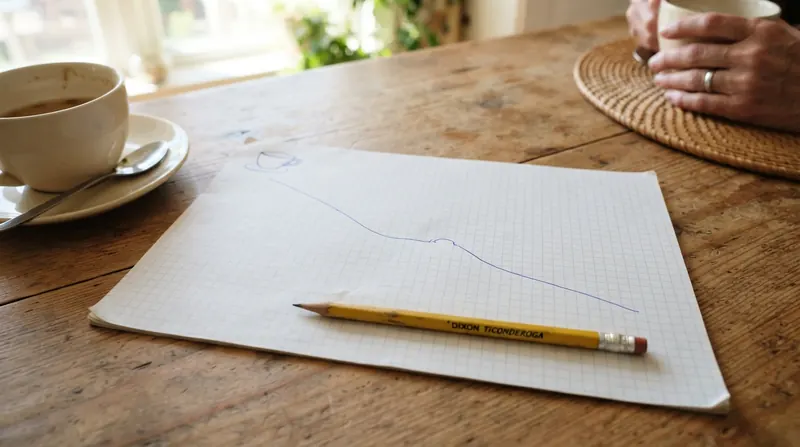
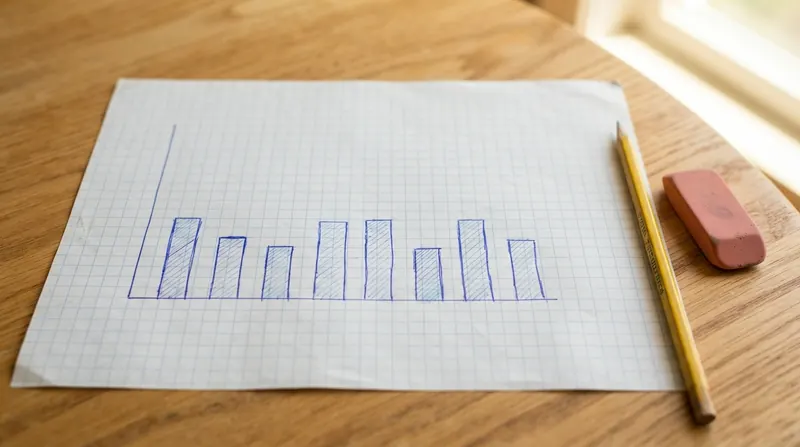
That chart is column four, the blue tin, drawn the way I'd draw a monthly expense line for the board. It falls, it bumps up at the potluck and at the grandchildren's weekend, and then it falls again.
I'm not drawing my morning readings for you, on purpose. Those belong to my clinician, and a reading in a newspaper column, even one this small, is a reading somebody will compare their own to.
Week four was the potluck, and I'm printing it because a ledger that skips the bad week isn't a ledger. Two plates, a slice of Bev's coconut cake, and a next-morning entry I underlined twice.
I didn't throw the notebook out. I wrote the potluck down, drank the cup at three o'clock the next day like any other day, and walked an extra ten minutes after supper because Leon insisted.
Week six is the one Hattie asked to see at bridge. The tin had gone from four lids a day in February to about one, and the library book, which used to end at page six, reached twenty-two pages one Tuesday before I noticed the time.
Twenty-two pages. I wrote the number in the margin and drew a box around it, the way I used to box the totals at the bottom of a ledger.
Week nine was the grandchildren, three days of birthday cake and pancakes and nobody near the kettle at three o'clock because three o'clock was a water-balloon fight.
I wrote "away from the columns" on each of those three lines and didn't scold myself once. A good bookkeeper knows the difference between a bad month and a holiday.

What the Clinician Said About Twelve Weeks of Columns
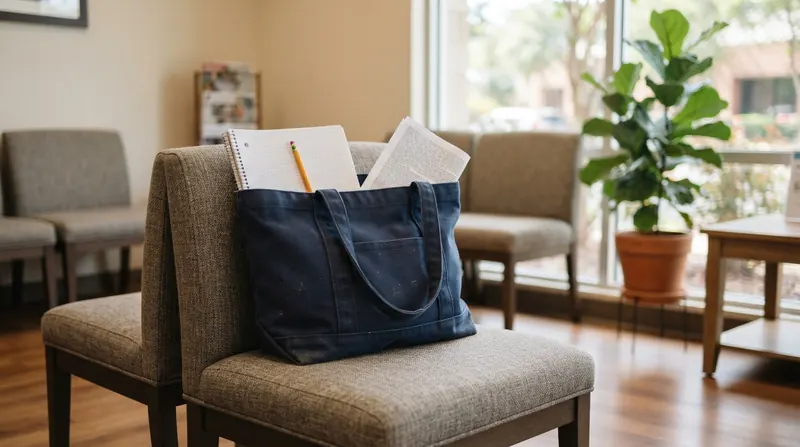
On the second Tuesday of June, I went back to the clinic with the notebook in my tote bag and a sharpened pencil in case anybody needed one.
My clinician read the lab sheet first, the way she does, and then she turned the screen toward me again. The direction, she said, had moved the right way a little.
Not a lot. A little.
"Keep doing what you're doing," she said, "and come back in three months."
Then I handed her the notebook, and she read three pages of it without saying a word, which in a twelve-minute appointment is a long time.
"You walked after supper sixty-one times," she said finally. "You know that's the column I care about most, don't you?"
I did know that. And here's the most honest sentence I can write about the tea: I cannot tell you which column did what.
In twelve weeks I walked more, opened the tin less, napped less, drank a savory cup at three o'clock and went back to bridge. Any one of those could be the reason for "a little," or all of them together, or none of them.
What I can tell you is the order of things. The cup didn't do the walking; Leon and I did that.
But the cup held the three o'clock hour long enough for the rest of the day to get its shoes on.
Hattie wrote that after she counted. I hadn't counted; Hattie counts everything, including the number of times I said "I'm fine" at Easter dinner, which was seven.
And notice the order she put it in: the cup, the walks, the appointments. The cup rides along; it never drives.
Where the Cup Actually Fits in a Day
People ask what a day looks like now, as if there were some grand new routine. There isn't, and that's the point.
6:40 a.m. The morning reading, written in pencil, number and time, no commentary.
Then coffee with Leon on the back step, which is not negotiable and never will be.
Noon. Lunch, written down in column two the way I'd log a delivery.
I don't count anything; I just write it, because writing it is most of the work.
At the Giant, and the blue cookie tins are two for one. Want them?
12:10No tins this week. Lemons and a dozen eggs, please.
12:12Lemons? Who are you and what have you done with my wife?
12:13Someone with a kettle. Walking shoes by the door at six-thirty.
12:153:00 p.m. The kettle goes on.
One heaping teaspoon goes into the basket infuser, the egg timer goes to six, and I sit down at the kitchen table with the notebook and whatever library book I'm losing to.
Six minutes is a surprising amount of time when you're not reaching for anything. I've read whole chapters in the time it takes the egg timer to ring and the cup to cool enough to drink.
6:30 p.m. Supper, and then the walk.
Leon and I go down Locust Street to the end of the block, past the Ferraros' roses and the house with the flag, and back by the school.
8:00 p.m. One line in the notebook, pencil, the date first.
Then the television, and Leon falling asleep in the recliner that used to be mine.
That's why I trust it, honestly. A thing that asks six minutes of your afternoon and a spoonful of leaves is a thing you'll still be doing in October.
The app asked for my attention every hour and lasted seven weeks. The vinegar asked for my throat and lasted nine days; the cup asks for a kettle I already owned, and it's lasted eight months.
How to Keep a Kitchen Notebook Like a Bookkeeper
More readers have asked me about the notebook than about the tea. So here's the method, exactly as I keep it, and it works for anything you're trying, including nothing at all.
Buy the cheapest graph-paper notebook in the store. A fancy journal makes you write fancy sentences, and fancy sentences lie.
Keep it where the kettle is. Mine lives on the kitchen table between the sugar bowl and the infuser, so I can't make the cup without seeing the page.
One line a day, date first. Then the same five or six columns every day: whatever your clinician asked you to watch, plus the afternoon, plus the walk.
Write numbers, not feelings. "Tin: 2" is an entry; "I was bad today" is a confession, and confessions don't add up at the end of the month.
Write the bad days in the same size handwriting as the good ones. That's the rule most people break, and it's the rule that makes the notebook worth anything.
Mark the days you missed. "Away" and "forgot" are real entries; my three grandchildren days told me as much as three good ones would have.
Read it once a week, not once a day. Daily reading makes you jumpy about Tuesday; weekly reading shows you the shape of the month.
Take it to your appointments. My clinician read three pages in June, and she told me it was the most useful thing a patient had handed her that spring.
That last rule is the reason I'd keep a notebook even if I'd never seen Hattie's bag. Twelve minutes goes a lot further when you walk in with twelve weeks of pencil.
What Readers Wrote When This Ran as a Short Column
A shorter version of this column ran in the spring. The comments were better than the column, which is usually how it goes.
The comments below are illustrative, retold from reader notes with names shortened. Replies sit indented under the comment they answer, and they're here because they ask what you're probably asking.
Norma's comment is the one I've thought about most. "Told everyone it was my knee."
I did the same thing with bridge. We invent a respectable reason, because the real one feels like a confession, and a confession at our age feels like a verdict.
And Shirley's comment is the reason I'd print the research file again tomorrow. Whatever you try, read the ingredient line, and then check the study against it; the plant in the study ought to be the plant in the bag.
Hattie and I, Recorded for the Church Newsletter
In July, the church newsletter asked whether Hattie and I would let them record one of our porch conversations for the "Neighbors" page. Hattie said yes before I could say no.
Here's the transcript, trimmed only for the parts where Leon interrupted to ask where the good scissors were.

Neighbors · The Porch Tapes, Episode 4
Two Bridge Partners, One Kettle and a Graph-Paper Notebook
Lorraine
host
Hattie, the newsletter wants to know why a home-ec teacher tore a page out of her own notebook and left it on my kitchen table.
 Hattie
guest
Because you'd stopped coming to bridge, and you're the only person at that table who can keep score without a calculator. I needed you back for purely selfish reasons.
Lorraine
host
And the bag? You could have brought a casserole.
Hattie
guest
A casserole is for after something bad happens, and a list is for before. Eight plants I could find in a kitchen or a garden, a kettle, and six minutes on the egg timer at three o'clock instead of that blue tin.
Lorraine
host
I audited it, you know: every line on the bag, and then the library. Cinnamon is "mixed," turmeric is "we don't know enough," and the famous plant from the big study isn't even in it.
Hattie
guest
I never told you it was in a study; I told you it gave my three o'clock something to do with its hands. You're the one who went looking for a footnote.
Lorraine
host
Fair enough, so tell the newsletter the honest version. What does it do?
Hattie
guest
It tastes like a good kitchen, and it costs about forty-three cents a cup. For twelve weeks, it sat at your table at three o'clock while you wrote in that notebook and walked with Leon after supper, and whatever the clinic saw in June, you earned with your feet.
Lorraine
host
And what would you tell somebody who's sitting in the clinic parking lot right now with a folded lab sheet?
Hattie
guest
Go home and buy a notebook, then ask your clinician what to watch. And if three o'clock is your trouble too, put the kettle on before you open anything with a lid.
Hattie listened to the recording afterward and asked for one correction. She wanted it on the record that she has never once owned a blue tin, which Bev disputes.
I've gone back to that last line of hers more than any other. "Put the kettle on before you open anything with a lid."
2 oz loose-leaf bag · about 30 cups · read the return terms before ordering
The Return Terms, Read Like a Contract
Now the part most columns skip, and the part I'd have read first at the co-op: what happens if you don't like it.
I want to be very plain here, because this is where a lot of tea companies and supplement companies get slippery. This seller does not offer a no-questions money-back guarantee, and I'm not going to call it one.
What it offers is a return policy, and the policy has numbers in it. I read it twice, the way I'd read a vendor contract, and here it is in my own words.
Unopened bags: you contact the company within 30 days of purchase, send the bag back, and you're refunded the purchase price less a $4.95 return shipping charge.
Opened bags: also within 30 days, in the original packaging, and you're refunded less the $4.95 return shipping charge and a 25 percent disposal fee.
On a $12.95 bag, that's a little over $3 for disposal and $4.95 for shipping, so an opened bag sent back would get you roughly $5 of your $12.95. I'd rather you know that now than discover it in July.
Sample bags: here the policy contradicts itself. One line says sample bags are the only teas that aren't returnable; another line says unopened samples can be returned within 30 days.
If that matters to you, call the 1-800 number before ordering and ask which line is the real one. A company that answers its own phone in Oregon can settle a contradiction in about two minutes.
Refund timing: the policy says refunds are processed within three to five business days after the return arrives.
Here is what I'd actually do, as a woman who spent thirty-four years telling farmers to try the small order first. Start with the sample bag, $5.95, about three to five cups.
Three to five cups is enough to find out whether you're a Walter or a Richard. If you're a Richard, you're out the price of a sandwich, and you don't need a return policy at all.
The company is Full Leaf Tea Company LLC, and it prints a street address in White City, Oregon, on its policies and on the bag. It also publishes a toll-free number, 1 (800) 635-2471, staffed Monday through Friday, nine to five Pacific.
A street address, a phone number and a return policy with real numbers in it. My checklist for any vendor at the co-op was three lines long, and this bag ticked all three before I got to the taste.
Shipping, for the record: $4.95 a box, waived on orders of $49 or more, and the seller ships only within the United States.
Five Letters That Came to the Kitchen Table
After the short column ran, I got more letters than I've had since my retirement party. I've answered the five that asked what most of the others asked.
The letters below are illustrative composites, retold from reader notes with names shortened. The answers are mine, the same ones I'd give across the bridge table.
Short answers to the questions Hattie gets at bridge
How do you make it?
One to two teaspoons of the loose leaf in eight ounces of boiling water, steeped five to seven minutes, per the seller. I use a heaping teaspoon, a basket infuser and an egg timer set to six.
What does it taste like?
Savory and warm: ginger and cinnamon up front, sage and oregano at the finish, or in the seller's words "a potent, savory blend with cozy and warming spiced notes." If you like sweet, flowery teas, you probably won't like it.
Does it come in tea bags?
No, it's loose leaf only. The seller sells empty paper drawstring tea bags separately, thirty for $4.95, if you'd rather fill your own.
Does it have caffeine?
The seller's listing says "Caffeine Content: None," and none of the eight herbs is a caffeinated tea plant.
How long does a bag last?
The 2 oz bag is about 30 servings for $12.95. The half-pound bulk bag is about 120 servings for $34.95, and the sample bag is about 3 to 5 servings for $5.95.
Will it change my numbers?
Nobody honest can promise that, and the seller's page carries the FDA statement saying its claims haven't been evaluated. My own clinician saw "a little" movement after twelve weeks of walking, fewer cookies and a three o'clock cup, and I can't tell you which one did what.
Can I drink it if I already take something for my numbers?
Take the bag to your pharmacist and tell your clinician before the first cup. Cinnamon, fenugreek and turmeric are the names I'd say out loud.
Is it organic?
The listing and the pouch both show USDA Organic, and each of the eight ingredients is listed as organic.
Who makes it, and how do I reach them?
Full Leaf Tea Company LLC, 2054 Antelope Rd, White City, Oregon. Phone 1 (800) 635-2471, weekdays 9 to 5 Pacific; email [email protected].
What if I don't like it?
Returns within 30 days, less a $4.95 return shipping charge, plus a 25% disposal fee if the bag is opened. That's why I'd start with the $5.95 sample bag.
Who This Bag Is For, and Who Should Skip It
I wouldn't close an audit without a recommendation page, so here's mine. Fair notice: half of it tells some of you not to buy.
It probably makes sense to look at it if:
- Your afternoons have an account of their own: a tin, a drawer, a recliner, a three o'clock you'd like back
- You want a warm ritual with your hands busy for six minutes, not something to swallow with water
- You like savory flavors: ginger, sage, a kitchen smell rather than a candy smell
- You'd rather read eight plant names you can picture than a list you need a dictionary for
- You'll actually keep a notebook and take it to your next appointment
It probably isn't for you if:
- You want a promise about your numbers; nobody honest can give you one, and the seller's FDA line says so
- You only like sweet or flowery teas; read Richard's review again
- You want the convenience of a tea bag without filling your own
- The mint family disagrees with you (holy basil, sage and oregano are all members)
- You're expecting, nursing, or already managing your numbers with your clinic and haven't asked them yet
That first line on the second list matters most. This is a cup of tea, not a plan; the plan is whatever you and your clinician write down together.
What a Cup Costs Against What I Already Spent
Now the money, because Hattie made me promise I'd put it in black and white. The 2-ounce bag is $12.95 for about thirty cups.
That works out to about 43 cents a cup. For comparison, the coffee-shop latte I used to buy after my Tuesday errands was $5.25, and the sugar-free cookies came to about $22 in one month.
I'm not saying the $60 was wasted because the cup is cheaper. I'm saying the $60 was aimed at breakfast, supper and my conscience, and the 43 cents is aimed at three o'clock.
If the bag suits you, the half-pound bulk bag brings the cup down to about 29 cents. If it doesn't, the sample bag is the cheapest way to find out, and I'd start there.
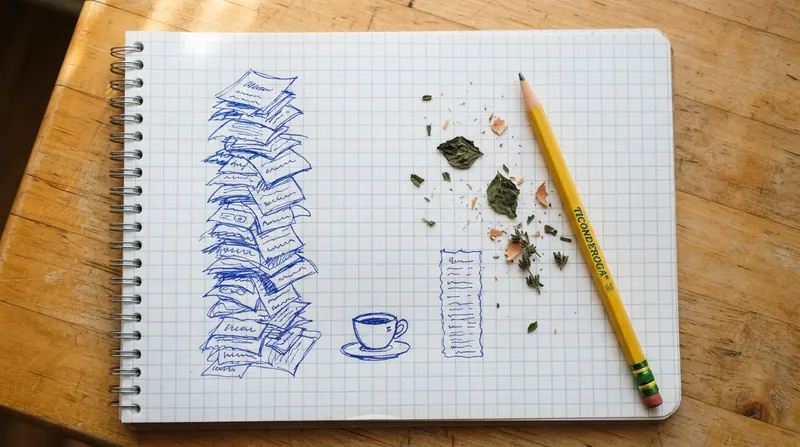
Where the Bag Stands, Line by Line
Here's the summary I'd staple to the front of the report. If you only remember one part of this column, make it this one.
✓ Eight organic herbs printed plainly on the back of the pouch: cinnamon, ginger root, holy basil, fenugreek, milk thistle, turmeric, sage and oregano, with no added sweetener and no caffeine listed.
✓ About 43 cents a cup, with a $5.95 sample bag for finding out whether you like it, and a toll-free phone line and street address in Oregon.
✓ A ritual that fits the three o'clock hour: a kettle, a teaspoon, an infuser and six minutes, nothing to swallow, nothing to measure past a spoon.
✓ A review page that shows its bad days, with 6 one-star reviews out of 132 sitting right alongside 110 five-star ones.
✗ No study on this bag, and mixed research on its best-known herb. Cinnamon is "not enough evidence," turmeric is "we don't know enough," and the plant with the biggest file in the aisle isn't in the blend. [1] [2] [3]
✗ No amounts per herb. It's a blend, like a seasoning mix, so no honest comparison to any trial is possible.
✗ Returns cost money. $4.95 for return shipping, plus 25 percent if the bag is opened; read the policy before you order, not after.
✗ Loose leaf only. There's sediment, and you'll need an infuser or a supply of paper bags.
If You're Sitting in Your Own Clinic Parking Lot
I can't tell you what to do. I can tell you what I'd do if I were reading this column instead of writing it, back in February, with a folded lab sheet on my knee.
First, before you buy anything at all: go home and rule a page. Date down the left, and across the top, whatever your clinician asked you to watch.
Second: add one column for your own three o'clock, whatever lives there. The tin, the drawer, the recliner, the television that starts repeating itself.
Third: walk after supper, even ten minutes, even to the end of the block. That's the column my clinician cared about most, and it costs nothing.
And fourth, if three o'clock is still your trouble and your clinic is behind you: read the label I've been describing for ten thousand words. Eight herbs, one to two teaspoons, six minutes, about 43 cents a cup.
I won't pretend a link at the bottom of a kitchen column is anything but a door to the seller's shop. The Sugar Notebook doesn't keep inventory; we keep columns.
But if you walk through that door, you'll know exactly what's on the other side: eight plants, a savory cup, a return policy with real numbers in it, and an Oregon phone line.
Loose leaf · eight organic herbs · start with the sample bag if you're unsure
One more thing, and then I'll let you get to your own afternoon. The notebook is still on my kitchen table, between the sugar bowl and the infuser.
Yesterday's line reads: "Oct 24. Kettle 3:00.
Tin 0. Walked to the school and back with Leon.
Bridge tomorrow, my turn to bring something."
Tin 0. Two words, in pencil, written by a woman who once skipped three Thursdays to avoid a dessert plate.
P.S. Hattie's torn page is taped inside my cupboard door now, next to the egg timer, its ink faded from blue to gray, and if you have a Hattie in your life, thank her; if you are the Hattie, tear the page out anyway.
P.P.S. Remember the order Hattie wrote on the back cover, the cup, the walks, the appointments: the cup is the smallest of the three, and it's the only one that comes in a bag.
The full ingredient guide, with a note on each of the eight herbs and on reading the advertising around this bag, is linked at the foot of this page.